
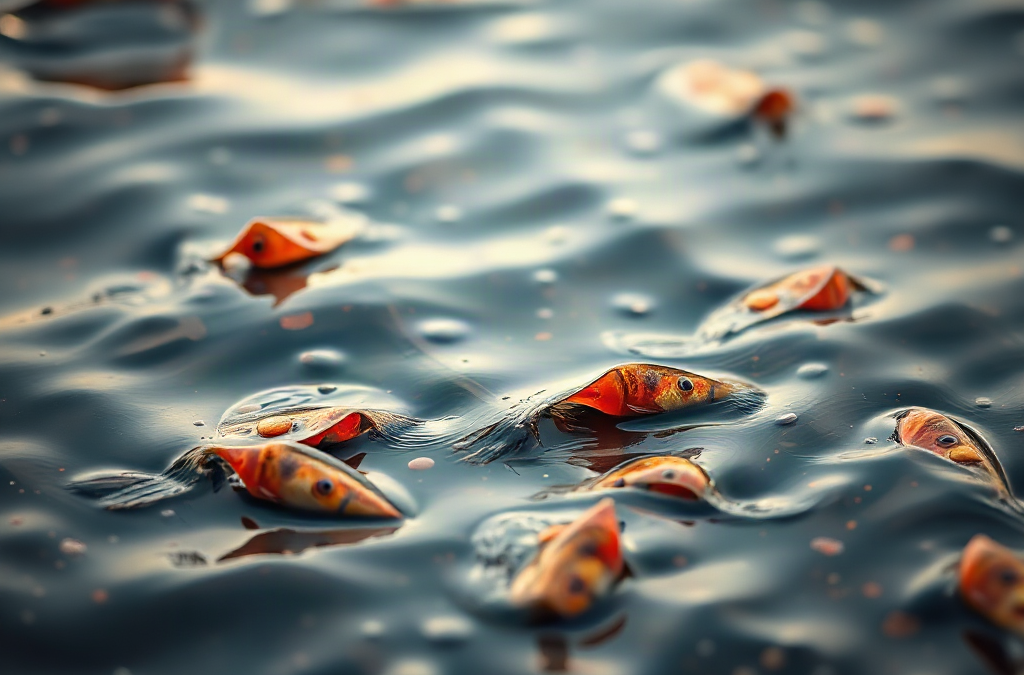
If you see signs of pollution in fishing waters, stop fishing, avoid touching the water or affected fish, move to a safe location, and report what you observed to the appropriate environmental or emergency authority. Record the location, time, odor, water color, visible discharge, distressed wildlife, and nearby pipes or vessels without entering the contaminated area. Do not eat or release a fish that appears coated, chemically exposed, or severely distressed; follow local agency instructions instead. Call emergency services for immediate danger, the National Response Center for suspected oil or chemical spills in the United States, or the relevant state, tribal, provincial, or local pollution hotline.
Which Pollution Signs Require Action?
A sudden change in the water, wildlife, or surrounding air deserves attention when it cannot be explained by ordinary local conditions. Strong chemical or petroleum odors, unnatural discoloration, oily sheens, foam emerging from a discharge point, dead fish, and multiple animals gasping at the surface can indicate a harmful release or a serious decline in water quality. A flowing pipe, leaking container, overturned tanker, or visible plume entering the water makes prompt reporting especially important.
Context helps distinguish suspicious pollution from a natural feature. Pollen can form yellow films, decaying plants may create foam, sediment can turn a river brown after rain, and some algae naturally discolor water. A petroleum sheen often reforms after being disturbed and may show angular, rainbow-like patterns, while some biological films break into irregular plates. These visual clues are useful observations, but they are not a chemical test. Anglers should report credible concerns rather than attempting to identify an unknown substance themselves.
Fish behavior can provide another warning. One dead fish may reflect injury, predation, or disease; numerous dead or disoriented fish across the same area suggest a larger event. Fish crowding near an inflow or gulping at the surface can occur when dissolved oxygen is low, sometimes after an algal bloom, sewage release, or decomposition event. The cause cannot be confirmed by appearance alone, and low oxygen is not necessarily evidence of an illegal discharge. Agencies need the observed pattern, location, and timing to investigate properly.
Prioritize signs according to urgency. A leaking fuel tank beside a boat ramp, a chemical drum entering a creek, or fumes causing breathing or eye irritation presents a more immediate risk than old litter along a shoreline. Move away and call emergency services if people are in danger. In the United States, suspected oil and hazardous-substance releases can also be reported to the National Response Center. Fish kills, recurring discharges, sewage odors, and suspicious water changes may instead be directed to a state environmental or fish and wildlife agency.
A common mistake is waiting for certainty. Anglers are not expected to prove what a substance is before reporting a credible observation. The better threshold is whether the condition is unusual, potentially harmful, and described with enough detail for an authority to evaluate. Equally, avoid publicly accusing a nearby property owner, farm, marina, or vessel without evidence. Report the observable facts and let investigators determine the source.
How Should You Protect Yourself and Your Catch?
Distance is the safest response to unknown contamination. Stop casting, leave the immediate shoreline or move the boat away from the affected area, and stay upwind if fumes are present. Keep children and pets away from discolored water, foam, dead animals, or contaminated objects. Do not wade in for a closer look, collect a jar of liquid, touch a leaking container, or try to block a flowing discharge.
Unknown pollutants can create more than one exposure route. A substance may irritate skin, release harmful vapor, contaminate hands and tackle, or be swallowed through food. Ordinary fishing gloves and rain gear are not chemical-protective equipment. An angler wearing boots may feel insulated from risk while still carrying residue into a vehicle, livewell, bait container, or home. If contact occurs, leave the area, remove contaminated outer items without spreading residue, rinse exposed skin with clean water when appropriate, and seek advice from emergency services or poison control if symptoms develop or the substance may be hazardous.
Treat the catch conservatively. Fish that came from visibly affected water, have an unusual chemical odor, are coated with material, or behave abnormally should not be eaten. Do not assume that cooking, trimming, freezing, or rinsing will make an unknown contaminant harmless. Consumption advisories address known risks in defined waters, but a new spill can create conditions not yet reflected in posted guidance. Contact the responsible fish and wildlife or public health agency before deciding what to do with fish retained from the area.
Releasing a contaminated or badly distressed fish is not automatically the best choice. Returning it may prolong distress or move residue from a livewell back into the water, while transporting it could violate local rules. Keep the fish isolated from food and clean equipment if that can be done without touching the pollutant, then ask the responding agency for disposal instructions. Never move live fish to another waterbody.
Equipment can wait until personal safety is secure. Photograph residue on a hull, anchor line, boots, or tackle before cleaning, because it may help document where contact occurred. Prevent contaminated rinse water from entering a storm drain or another lake. For substantial oil or chemical exposure, ask the environmental authority how the equipment should be handled rather than using household detergents at the access site. A frequent failure is scrubbing gear immediately and unintentionally spreading an unknown material.
How Do You Document and Report Water Pollution?
A useful report explains what was observed without requiring the angler to diagnose the event. From a safe position, note the exact location, time, weather, water appearance, odor, affected area, animal behavior, and any visible source. A map pin, boat ramp name, bridge number, nearby road, shoreline landmark, or GPS coordinates can help responders find a remote location. State whether the condition is still active, increasing, drifting, or no longer visible.
Photographs and short video clips can preserve details that change quickly. Include a wide view showing the setting and a closer view taken only from a safe distance. A recognizable landmark can establish scale and location. Do not cross fences, enter industrial property, operate a phone while controlling a boat, launch a drone where it is unsafe or prohibited, or delay leaving an area with strong fumes merely to obtain better footage.
Use a compact reporting checklist so important facts are not lost:
- Place: coordinates or a precise landmark, plus the waterbody name.
- Time: when first noticed and whether the release is continuing.
- Appearance: color, sheen, foam, debris, plume direction, and approximate extent.
- Effects: odors, irritation, dead fish, distressed wildlife, or closed access points.
- Possible source: a pipe, ditch, vessel, vehicle, outfall, or container, described without assigning blame.
Choose the reporting channel based on the hazard. Call emergency services when fumes, fire, an active crash, or immediate danger threatens people. In the United States, the National Response Center accepts reports of oil and chemical releases. State environmental agencies commonly handle water-quality incidents, while fish and wildlife agencies may investigate fish kills. Local wastewater utilities or health departments may be appropriate for suspected sewage. Outside the United States, use the national or regional environmental emergency service for that jurisdiction.
Provide your name and contact details if you are comfortable doing so, because an investigator may need clarification. Ask for an incident or reference number and record the agency, time, and person or unit contacted. If one office refers you elsewhere, share the same factual notes rather than changing the description to sound more certain. Posting online before reporting can spread incomplete claims and may not reach anyone able to respond. Social media can alert other anglers, but it should not replace an official report.

What Should You Do After Making a Report?
After reporting, preserve the original notes and follow any closure, cleanup, or consumption instructions issued by authorities. Save unedited photographs, videos, call times, and the incident number together. Investigators may ask about current direction, rainfall, boat traffic, nearby outfalls, or where distressed fish were concentrated. Prompt, consistent answers are more useful than later guesses about chemical identity or responsibility.
Do not return merely to check whether the condition has improved. Visible color or odor may disappear while contamination remains, and a shoreline can be officially restricted even when it looks normal. Look for notices from the relevant environmental, public health, fish and wildlife, park, or water-management agency. A reopened boat ramp does not necessarily cancel a fish-consumption advisory, because access decisions and food-safety decisions may be made for different reasons.
A lack of immediate visible response does not mean the report was ignored. Crews may need to locate the site, determine jurisdiction, collect defensible samples, or trace an intermittent discharge. If the release continues or conditions worsen, update the original agency using the incident number. Report new facts—such as a larger fish kill, a newly visible pipe, or material reaching a swimming area—rather than repeatedly submitting the same observation through unrelated channels.
Choose another fishing location until official information supports returning. Moving a short distance downstream or around a point may not be enough because wind, current, and tides can transport material beyond the visible patch. In connected waters, avoid transferring live bait, fish, bilge water, or livewell water from the affected site. Drain water only where permitted and where doing so will not spread suspected contamination.
The response is working when the report has a traceable number, responders can locate the site, updated hazards are communicated, and access or harvest advice comes from an accountable authority. It is failing when anglers rely on smell alone, assume clear water is safe, wash residue into drains, or resume keeping fish based on rumor. The practical standard is not personal reassurance; it is credible official guidance matched to the affected water, species, and time period.
Conclusion
Unusual water conditions call for caution, accurate observation, and a report through the right channel—not close inspection by an unprotected angler. Treat strong odors, active discharges, widespread fish distress, and unknown sheens as reasons to stop fishing and create distance. Record only what can be gathered safely, including the location, time, appearance, wildlife effects, and possible source.
Protect the catch and equipment from cross-contamination, and do not rely on cooking, rinsing, or a quick change in water appearance as proof of safety. Keep the incident number, preserve original images, and monitor instructions from environmental, fishery, or public health authorities. If conditions worsen, update the existing report with new facts. Return only when applicable closures and official advice support doing so.
Frequently Asked Questions
Should I collect a water sample as evidence?
No. Sampling an unknown substance can expose you to chemicals and may produce evidence that authorities cannot use. Record the scene from a safe location and let trained personnel collect samples.
Who should I call about dead fish?
Contact the state or regional fish and wildlife agency or environmental authority. Use emergency services when the fish kill accompanies dangerous fumes, a crash, fire, or an active chemical release.
Can I eat fish caught near an oily sheen?
Do not eat a fish exposed to a suspected spill or unknown sheen until the appropriate public health or fishery agency provides location-specific advice. Cooking does not reliably resolve every contamination risk.
Is surface foam always evidence of pollution?
No. Natural organic matter can create foam, especially near turbulent water. Foam with a chemical odor, unusual color, active outfall, wildlife effects, or sudden localized appearance warrants reporting.
What if I already touched the contaminated water?
Move away, avoid touching your face, and rinse exposed skin with clean water when appropriate. Seek urgent medical advice if irritation, dizziness, breathing difficulty, or other symptoms develop.
Further Reading
Authoritative Sources
- EPA: How to Report Spills and Environmental Violations
epa.govExplains United States reporting options for spills and suspected environmental violations
- EPA: National Response Center
epa.govProvides information about the federal contact point for reporting oil and hazardous-substance releases
- FDA: Advice About Eating Fish
fda.govOffers broader fish-consumption information to use alongside local, waterbody-specific advisories
- NOAA: Oil and Chemical Spills
response.restoration.noaa.govNoaa.govDescribes how oil and chemical spills affect aquatic environments and how spill response is organized

