
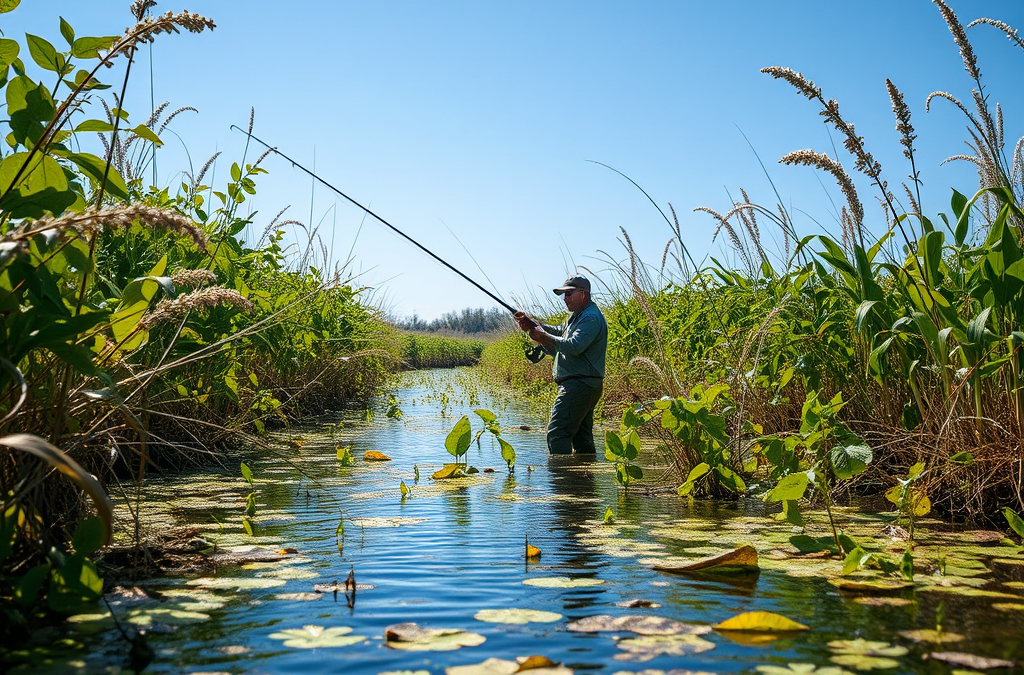
To fish in areas with heavy vegetation, use weedless lures and target the edges of the vegetation where fish tend to hide. Focus on baits like frogs, swimbaits, and jigs that can navigate through thick cover. Pay attention to the time of day, as early morning and late evening are often the best times for fishing in these areas, when fish are more active and feeding near the surface.
Understanding Vegetation Coverage and Its Impact on Fishing
Fishing in areas with heavy vegetation presents unique challenges and opportunities. Vegetation provides shelter and breeding grounds for fish, making these areas prime fishing spots. However, the thick cover can also complicate access and retrieval. Understanding the types of vegetation—such as lily pads, reeds, or submerged grass—and how they affect fish behavior is crucial for success. Fish often hide near the edges or within the cover, waiting to ambush prey, so knowing where to cast is key.

One common mistake among anglers is to overlook the importance of the structure created by vegetation. The edges of these areas often have higher fish activity due to the contrast between open water and dense cover. Therefore, targeting these transition zones can yield better results. Additionally, during warmer months, fish may seek cooler areas provided by the shade of plants, further influencing their location.
Choosing the Right Gear for Vegetation Fishing
Selecting the appropriate gear is essential when fishing in heavily vegetated areas. A robust rod and reel combo is necessary to handle the challenges posed by thick cover. A medium to heavy action rod is recommended, as it provides the strength needed to pull fish through the vegetation. Pair this with a high-speed reel that allows for quick retrieval when a fish strikes.
Line choice also plays a significant role. Braided line is often favored in these scenarios due to its strength and low visibility, allowing anglers to cut through vegetation effectively. A test strength of 30 to 65 pounds is ideal, as it provides enough durability to handle large fish while still being manageable. Additionally, using a fluorocarbon leader can help reduce visibility and increase your chances of a successful catch.
Effective Bait and Lure Choices
The right bait can make all the difference when fishing in areas with heavy vegetation. Topwater lures, such as frogs and poppers, are particularly effective as they can be worked across the surface without getting snagged. These lures mimic the natural prey of fish and can provoke aggressive strikes.
Jigs are another excellent choice for fishing in thick cover. They can be flipped or pitched into openings in the vegetation, allowing you to present your bait directly in front of fish without getting caught. Using a trailer on your jig can enhance its appeal, mimicking the movement of natural prey.
Swimbaits and soft plastics can also be effective, especially when rigged weedless. These baits can be slowly retrieved through vegetation, enticing fish that are hiding within the cover. Experimenting with colors and sizes based on local forage can further improve your chances of success.
Techniques for Navigating Heavy Vegetation
When fishing in heavy vegetation, employing the right techniques is crucial. First, practice accurate casting to ensure your bait lands in the desired spot. Pitching or flipping techniques allow for precise placement, minimizing the risk of snagging your line.
Another effective technique is to use a slow retrieve, particularly with soft plastics or jigs. This method allows the bait to stay in the strike zone longer, increasing the likelihood of a bite. Additionally, consider varying your retrieve speed and style to see what triggers fish in that specific area.
Be prepared for snags; even with the best gear, getting caught in vegetation is common. When this happens, gently pull your line to free it without snapping. Learning to feel for the difference between a snag and a fish can also enhance your fishing experience.

For more in-depth information on fishing techniques and strategies in heavily vegetated areas, consider checking out local fishing guides or resources from reputable fishing organizations. They often provide insights tailored to specific regions and conditions.
Frequently Asked Questions
What types of fish are commonly found in heavily vegetated areas?
Species such as bass, pike, and panfish are often found in heavily vegetated areas, as they use the cover for hunting and protection.
How can I prevent my line from snagging in vegetation?
Using weedless hooks and practicing accurate casting can help minimize snags when fishing in dense vegetation.
What is the best time of day to fish in areas with heavy vegetation?
Early mornings and late evenings are typically the best times to fish in these areas, as fish are more active during these times.
Can I use live bait in heavily vegetated areas?
Yes, live bait can be effective, but it’s important to use a rig that minimizes snagging, such as a bobber rig or a weedless setup.
What common mistakes should I avoid when fishing in vegetation?
Avoid using heavy tackle that makes it difficult to navigate the cover and be cautious of overcasting, which can lead to snags.
Further Reading
Authoritative Sources
- Library of Congress Research Guides
guides.loc.govResearch guides that help readers locate reliable background sources on a wide range of subjects
- USA.gov Official Information and Services
usa.govOfficial U.S. government information and public resources for practical reference
- Google Scholar
scholar.google.comAcademic search resource for finding research literature and source material
Conclusion
Fishing in areas with heavy vegetation can be incredibly rewarding if approached correctly. By understanding the environment, choosing the right gear, and employing effective techniques, you can significantly increase your chances of success. Focus on the edges of vegetation, use suitable baits, and be patient as you navigate the challenges of fishing in these unique habitats. With practice and persistence, you will find that these areas can yield some of the best fishing experiences.

